Tuesday, August 29, 2023

Transportation Needs

‘It’s not easy’ is a very common phrase that I hear in Damongo. I joke with my new friends that it should be the motto underneath the Ghanaian flag. Perhaps it could be translated into Latin: ‘non facile est.’ In truth, things being easy or not is a very relative term. Arguably, none of us has it ‘easy’. When I hear the phrase in Ghana, it is not said with any resentment or sadness. It’s just a statement of fact. The people here are amazingly resilient. Many are used to living on the fringe and making due with what little they have. Being very community and family oriented certainly eases the burdens, at least spiritually. Their traditions place great value in looking out for each other and sharing. Frankly, it’s something that we have lost in the West and could relearn from them.

One of the biggest obstacles here is transportation. While the costs of basic food, shelter and clothing are very relative in the developed and less developed areas of the world, vehicles and fuel are not. Like most developing countries, the most common form of getting from one place to another in rural Ghana is by foot, a healthy tradition I have happily embraced. Longer distances are most commonly traversed by means of bicycles, scooters and small motorcycles. When you see a car or pickup truck, it’s common to see upwards of 15-20 people in and on them (and 4-5 on a cycle!). These are the basic ways Ghanaians attempt to address fuel and vehicle costs. For reasons I will clarify, my role here as a contractor and facilities manager often demands a more utilitarian means of transport: a work-dedicated and shared-usage pickup truck.

The Diocese of Damongo is 11,000 square miles in area (a little larger than the state of Massachusetts) and serves approximately 410,000 people in 13 parishes. While my work is mainly centered at the Secretariat and its Unity Centre Complex (guesthouse, restaurant and bar) as a manager and head of maintenance, there is also a glaring need for my abilities to repair diocese buildings in the outlying parishes. Unfortunately, there is currently no vehicle or driver assigned either to the Unity Centre Complex to take care of such things as food and beverage procurement and the transport of larger maintenance materials or for building maintenance at the outlying parishes. My proposal here will help to solve both issues.

The Unity Centre serves as the Diocese’s sole method of generating income, and often times the restaurant matron and I will engage private transportation to go into town and buy food, supplies and other materials which affects this very important bottom line. To maximize the efficiency of my manager/maintenance role here, it would seem that a vehicle, which is not currently budgeted for, is a necessity.

The Secretariat and the local and outlying parish ministries are the first line of defense in the battle against poverty (national per capita income is about $2200, but far less in rural areas like Damongo and the 13 other parishes). Equally important, is that the church serves as the source of spiritual well-being and community. The people here take great pride in their worship, always clean and well-dressed and participating with great energy in the weekly and special services. Like any other structures over time, the churches and other diocese buildings need repair and would greatly benefit from the simple, regular maintenance that I could provide and thus help to foster that pride and devotion that congregations and employees bring to the buildings. This is a large part of the reason Lay Mission Helpers sent me here and, as of now, is a scope of work that has yet to be addressed mainly because of transportation issues.

Currently, the diocese owns a vehicle (2008 Nissan D22) that needs @$4,300 in repairs to make it safely road ready for travel within Damongo and the more difficult travel to parishes further away. In addition, my licensing, insurance and miscellaneous fees would total @$1,000 and a years-worth of fuel and oil changes is estimated at @$1100 per year. The appeal I’m asking you to consider would total $7,500 (repairs, fees, 2 years of fuel and miscellaneous costs). Any donation would be greatly appreciated as I try to live up to the LMH credo and mission of ‘For we are God’s Helpers.’ (1 Cor 3:9)

You can make a tax-deductible donation on the LMH website www.laymissionhelpers.org by selecting the DONATE button and choosing “Mark McGraw’s Mission”.

Peace and prayers, & my deep thanks in advance!


Friday, July 28, 2023

Pivot

Here in Damongo, the people do not have the luxury of looking at a plate of food and wondering where it comes from. In most cases they can automatically trace it back to the seed or even the long-ago consumed plant that the seed came from. You see, everyone here is at least a part-time farmer. And when I say everyone, I mean EVERYONE- the priest (even the bishop), the accountant, the shop-keeper, the yellow-yellow (cab) driver, the children and everyone in between. Until now, everyone except this ‘roaming obroni’ (stranger) who wanders around town passing out suckers to children. It was past due time for me to pad my resume!

When the newly appointed Nun/Accountant approached me, the Contractor/Restauranteur/ Writer/Obrani-roamer, because she had found an unused 400 square yard plot of land that needed farming, what choice did I have? The restaurant needs food and also to cut expenses. Producing it ourselves helps to solve both issues. This is Ghana. I am here. It’s the rainy season. That’s all that matters. As it was already getting a little late in the season, I realized it was time to pivot. There wasn’t much time to ponder. It was time to get busy with some learning. To be a farmer. Time to be a Ghanaian.

So, I built a fence around the proposed area to keep my fellow ‘roaming’ creatures from sharing in our proposed bounty and then engaged the help of some willing teen-aged farmers in preparing the ground by plowing it. At this point the real learning was initiated. The Nun/Accountant/Farmer began to instruct me. I truly believe that the people here much prefer working the land to the various western skills their lives have been burdened with. Love, purpose and tradition can never be suppressed for long in any of us. They are like germinating seeds. Her eyes gave it away and we mindfully proceeded to navigate through our cultural and language divide. I learned about replanting shoots of tomato, where to place the ‘okro’- our main crop, which seeds to scatter, which to bury- how deep and how many in each hole. Pumpkin, meringue, red pepper, green pepper, beans and a few that I can’t pronounce and won’t know about until they produce fruit or leaves.

I have also learned to pay greater attention to the rain, no longer just concerned about the large cistern at my house being filled by my gutters, but more importantly, how it affects the welfare of those seedlings meant to feed those who are now ‘my people’ and whether I need to haul water when the universe is sleeping on the job. I was also quickly developing an empathy about how it affects my brother farmers. I’m sure I will learn about weeds- unfortunately, the rain benefits the invited and uninvited equally. I hope I learn much less about pests and blights and way more about harvest and food preparation. But besides my desire, most of these things are largely out of my willing hands. They might even require further changes of direction.

My latest pivot has altered my routine in a very positive way. The garden (farm?) is mine to steward for now and for the foreseeable future. It is close to the office I walk to and checking on it each morning- gaging its growth- has become a new and welcome highlight of my day as I optimistically imagine it’s yield. Through learning, I have diversified my purpose, finding another way to value my neighbor through that most basic shared connection- the earth.


Monday, July 17, 2023

Achieving Balance

In every situation we encounter in life, there is a sense of both known and unknown. The known is our experience, the unknown our openness and willingness to learn. Achieving a healthy balance is a key to a fruitful existence.

Recently in Damongo this balance was revealed to me in a very real way. Since I arrived, I've wanted to introduce pizza to the restaurant I'm helping to run and to the area in general, figuring it to be pretty universally popular type food and an untested market for financial growth for a Diocese short on money. I have 45 years’ experience in making pizza, including about 25 commercially. In Damongo, that would make me the expert, right? Kind of... 

You see, some of the younger people here have tried pizza a few times in the bigger cities and have their own ideas of what it should be that are different than mine. When they sampled my version, I was critiqued in ways that I did not expect, and at times had to resist pushing back based upon my relative experience. However, I resisted, realizing that I'm not making pizza in Cleveland for Clevelanders. I'm making it in Ghana for Ghanaians. To be successful in this venture, as in any venture, sometimes means releasing the grip on our own ideas to make room for other, newer ones. Not abandoning one for the other, but achieving balance. That's how life works. 


Friday, June 30, 2023

Go Outside And Say Hello

I walk around Damongo and other parts of Ghana passing out small 'dum-dum' suckers to children. Yeah, I know. Kind of weird. I'd be hauled in by authorities in the US. Believe it or not, there's a method to my madness. 

80% of the area I live in is Muslim. Today was a little slow at work and I left a little early , as it's one of their biggest holy day celebrations: Eid al-Adha, which is a commemoration of Abraham's willingness to sacrifice his son, Isaac at God's request (Yes, God was bluffing. And, yes, Muslims, Jews and Christians all share this story, among many other writings and traditions. Go figure.).

As I walked home, I passed a house where a few children regularly come out to collect their tribute. There was more activity than normal and a lot more kids emerged from the house. Thankfully, I was well supplied. We shared greetings and suckers. But before I left, one of the adults beckoned for me to come inside their fenced-in yard. Soon I was sharing pleasantries and smiles with 30-40 people despite the language barrier; snapped a few pictures; and was invited to their feast of roast lamb tomorrow when I pass by again. Because of my strange little habit, I now have 30-40 new friends.

Why am I telling this story? Like the US and every other country, Ghana has all sorts of cultural diversity; based on tribes, languages and religions. As we all know, these can be wonderful things but can also lead to mistrust and worse. I find that people are people- everywhere in the world- sharing many more similarities than differences. Often your ethnic group, government, religion or favorite media outlet will try to convince you otherwise. Turn off your TV. Go outside and say hello to someone you don't know. Offer them a piece of candy! You never know. You might end up with a new friend or even a plate of BBQ. One thing for sure: you'll never know unless you try.


Monday, May 1, 2023

Assimilation


“Enter through their door, and be sure to leave through yours.”

 -St. Ignatius Loyola (on trying to make yourself understood to another)

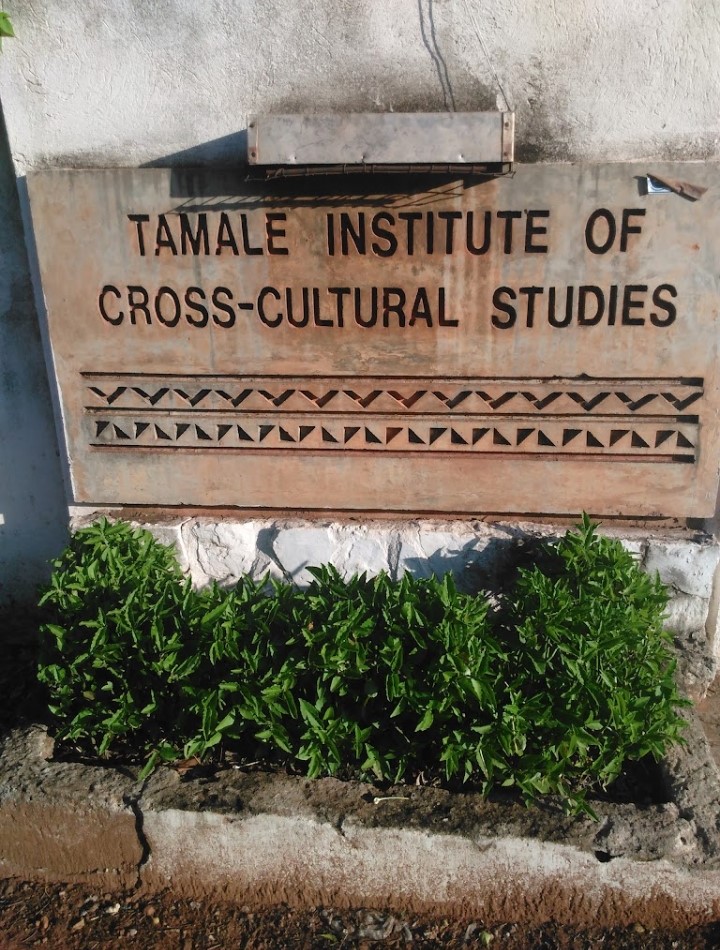
Part of the training for my mission work in Ghana is to attend a month-long program at the Tamale Institute of Cross-Cultural Studies (TICCS). I will be attending in Tamale, one of the larger cities in Ghana (2023 population: @730,000 and the fastest growing city in West Africa) and the closest one to Damongo (@ 2 hours away) for the entire month of May. While I have been in Damongo for almost 3 months now, I am able to specifically recognize my own cultural shortcomings. I need to learn more to be successful in my mission. That’s self-awareness. One of the main issues that many of us have, and I am no exception, is the perception that we either have no need to acquire more knowledge or that we so mistrust and fear new ideas that we close ourselves off to even considering them. Cross-culturally this is more important than perhaps anywhere else in life. Truth is, once we stop growing and learning, we stop living, create thicker and higher barriers, and thus, begin dying.


I am constantly learning here in Damongo, and thankful for it. Besides the goal of immersing myself into this society in a more general way, my professional purpose for being here is as both property and hospitality manager. I have approximately 35-years-experience between the two. While that gives me a very basic overview of how systems work in a general way, the particulars are what can make or break us success-wise. I am very fortunate to have my battery powered tools here (they are quite a luxury in this place). However, the material is not only often quite different from what I’m used to, but there is also a constant scarcity issue. Imagine exchanging a supplier like Home Depot or Lowes with a purveyor no larger than the size of the basic American living room! Obviously, that means that projects are smaller, move slower and require MacGuyver-like improvisation on my part. Accepting the situation as ‘different’ is far more beneficial than to judge it inferior. That type of judgement will only benefit my ego and won’t get the work done.

Similarly, the cuisine is very alien to my experiences. I have been cooking for myself since age 12 and owned restaurants for over 20 years, but there are huge differences here that will take time to process. First of all, there are virtually no natural dairy products- milk, cheese or butter. There are just eggs. This is due in no small part to the hot climate and inability to refrigerate for most people. Because dairy products have never really existed here, there is not only a lack of familiarity and desire for them, but many of their digestive systems probably couldn’t handle them anyway. Because of the climate and the general poverty, the people here have also grown to accept less variety. They truly eat to live. Desserts and sugar are virtually absent from the diet as well. The daily fare is almost exclusively starch and protein based. Rice and a doughy substance known as banku are served with either chicken or bony fish. Spice level is the common variable in most dishes. Most of the people here like their food served spicy hot as peppers are readily available. A self-aware person realizes right away that he is not going to completely revamp diets that have evolved over thousands of years.

I can cook a large variety of foods that would satisfy most of the palettes I’m familiar with. However, I am still in the process of getting to know the culinary habits of my hosts here in Ghana. My knowledge of particular cuisines such as Italian, Cajun, Eastern European or American is of little use here. What is of use right now is helping to implement systems of efficiency for what is existing. For instance, this week I hope to install some much-needed shelving to free up counter space in the kitchen. Last week, I built wooden cash register drawers. I sit with the kitchen manager and plan quality control and food ordering procedures. Innovations with respect to tradition is my goal. When I return from the TICCS class, I will have a richer knowledge of menu ingredients and their cultural significance. Local tradition taking precedence over my ideas, and being careful to take none of the rejections personally. Building trust not only knocks down the barriers between my fellow workers and me, but will require no small measure of humility on my part.

So often, life is about self-awareness. It’s one of the qualities that we should always concentrate on developing. What I find most ironic is that ‘self-awareness’ is more about the other person or people than about ourselves. Being self-aware is to be self-corrective to the benefit of those around you; to become unselfish; to understand that you and your needs are not the most important piece of life’s puzzle; to realize that observation and processing all that surrounds you precedes judgement, commentary and reaction. Pride is the enemy of self-awareness, and I am not alone in battling it each day. Often, we live within our own echo chamber, reassuring ourselves that we are the sole arbitrators of everything that crosses our path. Unfortunately, this misconception becomes more strongly rooted as we grow older and more set in our ways. 

I’ve been like a ‘bull in a China shop’ for much of my life on a few different levels. Like most of us, I don’t wake up with bad intentions but at times lack a certain mindfulness. This is where self-awareness and a positive spirituality become such valuable tools. But like any tools they require practice to be utilized. They are keys in not only engaging cultures across the world, but also the family in the house across the street or the stranger in the park. The world has about 8 billion people in it, all of us with our own unique personalities, skills and expectations. No one of us, nor any culture, is more important than another despite what we would like to believe or what we have been erroneously taught. Living life with humility, finding more comfort in learning than in teaching, and in listening rather than speaking, leads me to discover the joy that exists within myself. I know I will achieve my greatest satisfactions when I accept that my own acknowledged unimportance is the most precious gift that I bring to the world. 

Friday, March 17, 2023

Starting Work

I received my assignment from the Catholic Diocese of Damongo 2 weeks ago and am gratified to report that it appears I will be kept quite busy during my tenure here. The Diocese has one stream of revenue and I have been given an important dual role to not only help in maintaining the current financial status but also to help to increase it. I have been named ‘overseer’ of the Unity Centre, which is the name of the jointly-run hospitality venues on the Secretariat property- the restaurant, bar and guesthouse (the current one and a brand new one opening soon). In addition to facilitate the actual operations of these 3 entities, I will also be in charge of maintenance.

I operated my own 3 restaurant/tavern over 20 plus years in the Cleveland, Ohio area until about 2014 when I began a contracting business. The biggest change facing me in Damongo will be having ‘bosses’, as I have been self employed for most of my life. My spirituality is very grounded in humility, so working with others will not be an issue and I am quickly getting used to the ‘checks and balances’ aspect of this assignment. From the day I touched down in Accra, I was impressed with the graciousness of the Ghanaian people, so working side by side with them in their hospitality industry is a natural fit.

My management style has always been to be very hands on, which so far here has meant washing dishes, and clearing tables in the restaurant in addition to watching how the food is prepared and how the money is handled. At this point, my staff are the experts. It is my job to watch, learn, and pitch in where I can. Damongo has a cuisine, like most places, that is unique to their culture. It is very starch based, which means most meals consist of chicken or fish and a rice dish or a local dough ball called banku, which is also served with a very tasty ground nut soup. My job is not to convert the people to McDonalds or Pizza Hut, but, after learning more, perhaps assimilating a few ideas into existing menu items to increase their appeal.

Similarly, my job as maintenance supervisor is to first assess issues as presented to me by current staff and not merely direct them to carry those tasks out, but instead, to do tasks with them and engender a spirit of shared purpose. I don’t mind being the guy who gets dirty. Materials are a challenge to me now, as we don’t have a Home Depot, nor a lot of money to work with. Where there’s a will there’s a way, I find. A sense of shared purpose cures a lot of other deficiencies. When you exhibit that, community follows and goals are accomplished.

The job of any good manager is to plant the seed of ‘ownership’ in those he works with. With ownership comes growth. I won’t be here forever. My goal is to leave a seamless transition in my wake, people who can not only perform my duties, but to do them even better and perhaps teach the next generation to perform theirs. I am a big believer not only in humility but also gratitude. I walk around with a lot of both of those gifts each day here. While I feel that my actual work is important on one level, my true purpose here is to participate in the cycle of God’s love and I can’t do that without inviting those around me to also participate, not through my words, but through my actions. 

Friday, March 3, 2023

One Month In

After my first month in Damongo, I feel pretty well settled in. I’m a big proponent of factoring what you are over where you are physically in life, as WHAT we are is an undeniable constant and places change. The transition from life in Cleveland, Ohio to Los Angeles at the LMH Mission House was very smooth and I’m finding that living in Damongo, Ghana is equally seamless. Sure, it’s very warm here (most days above 100F), there are language differences (though a majority of the people have some English), and we lack some of the US conveniences that most of us take for granted, I did not come here for a vacation, nor, truth be told, do I really miss any of those conveniences. I came here with a set of goals and useful skills to assimilate myself into this culture, share ideas and work, and, in the end, hopefully experience mutual learning and growth that results from a shared higher purpose.

One thing that is very different in Damongo is the pace of life. Things move very slow here. It very well may be because of the heat. After formation in LA, the long holiday break, the packing process and 22-hour trip over 2 days, I was raring to go. The diocese here looks at things a little differently. To their credit, they felt it is primary to meet me, let me learn a little about the people and culture, and match me to the correct position based upon my skills and their needs. At age 57, my work and life skills are as varied as the twists and turns of life. I went to school to be a teacher, ended up owning and managing bars and restaurants over 25 years, and most recently became a self-taught contractor and property manager.

While Damongo is a fairly rural area by American standards, it has a steadily growing population and 4 years ago was named the capital of the Savannah Region of Ghana. While the Catholic Church is one of the original stakeholders here, like any other institution they need to be sustainable on a number of levels, including finance and building maintenance, in order to remain viable and spread their message. The diocese recently completed building a modern guesthouse which is complimented by an existing restaurant/tavern which, I’m told, is in need of a ‘bar rescue’ to provide the diocese with much needed income. They are also in need of someone to maintain building infrastructure and/or provide oversight to various building projects. I jokingly told Bishop Peter Paul that they should have asked for two of me!

Whatever the decision does not matter so much to me. I am confident that I will be prepared sufficiently for whatever comes my way. I find that if you approach life with humility, openness and the ability to set clear goals, the rest of it tends to take care of itself. So, for right now, I am awaiting that direction with excitement tempered by realistic expectations. I feel quite convinced that God has placed me where I am supposed to be and have full faith that He will also have me do what it is I am supposed to do. 

AMDG

(Ad Majorem Dei Gloriam- For the Greater Glory of God)    


Harvest Time

  It is harvest time in Damongo. This generally lasts from end of August until the beginning of November. Unlike last year's rather deva...